

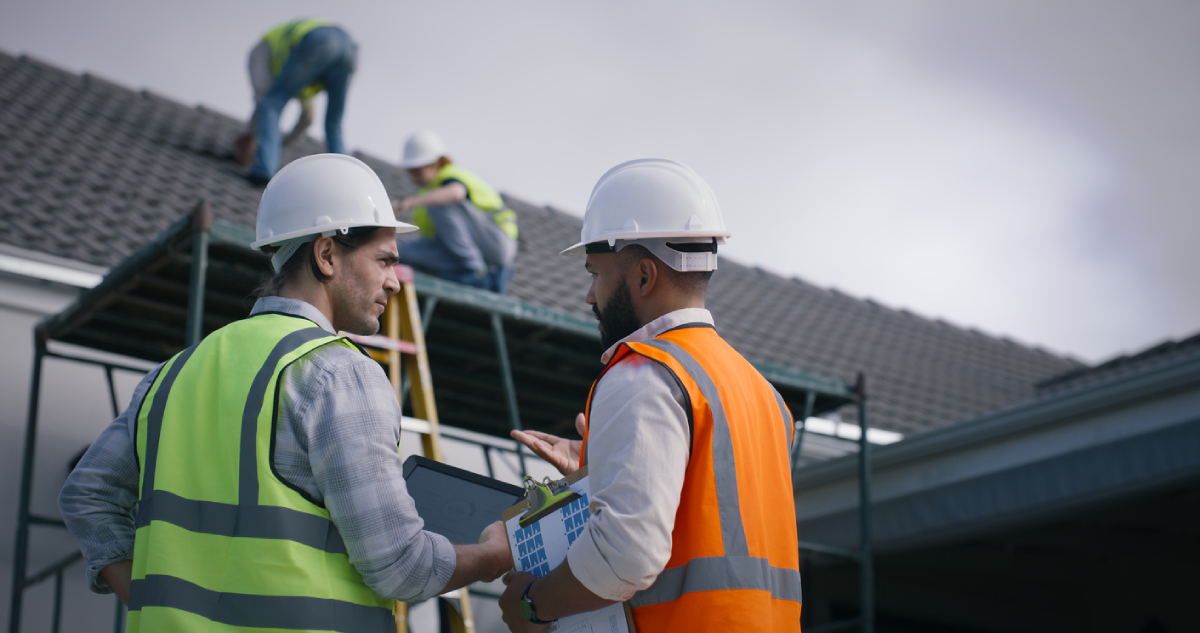



Property owners dealing with roof damage after a storm face two distinct professionals who serve different functions in the insurance claim process. A public adjuster negotiates your claim settlement on your behalf. A roofing contractor repairs or replaces the physical roof. The confusion arises because both inspect damage, both prepare estimates, and both interact with your insurance company’s adjuster. But their licensing, legal authority, payment models, and core objectives differ in ways that directly affect how much money you recover and how well your roof gets fixed.
This comparison breaks down where each professional adds value, where each falls short, and which one you should hire based on your specific situation.
The short answer: For straightforward roof damage where the insurance company cooperates and the claim falls under $20,000 to $30,000, a roofing contractor handles documentation and repairs without charging a percentage of your settlement. When the insurer disputes coverage, underpays, or the claim involves multiple types of damage beyond the roof, a public adjuster’s legal authority to negotiate and interpret your insurance policy typically recovers more than their 10–15% fee costs you.
What Is a Public Adjuster?
A public adjuster is licensed by state insurance departments to represent policyholders in insurance claims. Public adjusters represent policyholders, not insurance companies. They do not touch your roof. Instead, they assess damage in detail, interpret policy coverage and exclusions, prepare estimates using estimating software like Xactimate, file claim documents, including the proof of loss form, and negotiate directly with insurance carriers on your behalf. Public adjusters handle paperwork and negotiations for claims, and they help document and value roof losses accurately. Public adjusters operate under strict legal and ethical guidelines set by each state’s department of insurance.
Their fee structure is contingency-based: public adjusters charge 10–15% of the total claim settlement, meaning they collect nothing if your claim pays nothing.
What Is a Roofing Contractor’s Role in Insurance Claims?
A roofing contractor inspects, repairs, or replaces the physical roof structure. Their core job is construction, but most roofing companies now include claim assistance as part of their service. Roofing contractors manage inspections, permits, and physical installation of roofs. They provide detailed damage assessments for claims and prepare accurate repair estimates for insurance documentation. Contractors can assist in temporary repairs to prevent further damage while the claim is processed.
A roofing contractor is paid through construction contracts, not by a percentage of insurance claims. Their compensation comes from the cost of materials, labor, overhead, and profit on the repair job itself. Roofing contractors may charge a flat fee or hourly rate for standalone consulting, though most fold claim assistance into the repair contract at no extra charge.
Public Adjuster vs Roofing Contractor: How They Compare at a Glance
| Factor | Public Adjuster | Roofing Contractor |
|---|---|---|
| Best for | Large, disputed, or denied roof damage claims; unclear policy coverage | Straightforward storm damage; cooperative insurer; moderate claim size |
| Cost structure | 10–15% of settlement (contingency); Illinois law limits public adjuster fees to 15% of settlements | Repair costs (materials + labor); claim support often included free |
| Primary focus | Claim negotiation, policy interpretation, maximizing settlement | Damage assessment, physical repairs, code-compliant installation |
| Legal authority | Licensed to negotiate and interpret insurance policy terms on homeowner’s behalf | Cannot negotiate insurance claims directly; cannot act as public adjusters unless specifically licensed to do so |
Public adjusters work for your claim; roofing contractors work on your roof. The question is whether your situation demands one, the other, or both.
Can a roofing contractor and public adjuster work together on my claim?
Yes, and the combination covers both sides of the claim. The contractor inspects the roof, identifies all physical damage to the roofing system, prepares the repair estimate, and performs the work. The public adjuster interprets the insurance policy, negotiates larger payouts for insurance claims, files supplements for undercounted items, and pushes the carrier toward a fair settlement. Public adjusters negotiate larger payouts for insurance claims while contractors ensure the scope of physical damage is fully documented. For this to work, both parties need to share documentation freely; the contractor’s repair scope is the foundation the PA uses to justify the settlement amount.
Primary Expertise and Focus
A public adjuster’s training centers on insurance policy language, depreciation calculations, actual cash value versus replacement costs, and carrier-specific adjuster tactics. When damage occurs after high winds or hail, for instance, a public adjuster knows which line items insurers commonly omit from Xactimate estimates: ice and water shield, starter strips, drip edge, removal and haul-off rates. They marshal evidence through photographs, aerial imagery, and material databases to justify each line item in the scope.
Roofing contractors bring a different skill set. They identify physical damage to the roofing system that an insurance adjuster might miss: compromised roof deck sheathing, torn underlayment beneath intact shingles, damaged flashing around penetrations. They determine whether partial repairs will restore the roof or whether the entire roof needs replacement based on the roof type, age, and extent of damage caused by the storm. Contractors also distinguish between storm damage and normal wear, a distinction that determines whether your insurance policy covers the loss at all.
Winner: depends on the bottleneck. If the dispute is about what the insurer will pay, the public adjuster’s policy expertise matters more. If the dispute is about what damage actually exists on the roof, the contractor’s technical opinion carries more weight. For hail claims where the insurance company’s adjuster counted 15 hits per test square, and your contractor counted 40, the contractor’s documentation is the evidence that moves the settlement.
Authority to Negotiate Insurance Claims
In many states, roofing contractors cannot negotiate insurance policy terms. Only the policyholder, a licensed public adjuster, or an attorney can legally interpret coverage details, negotiate settlement amounts, or file formal disputes with the carrier. In Illinois, for example, only these three parties may negotiate or interpret policy coverage on a homeowner’s behalf. Texas law goes further: contractors performing repair work on a claim cannot also act as public adjusters for that same claim.
Roofing contractors cannot legally act as public adjusters unless specifically licensed to do so. What contractors can do is attend the adjuster’s inspection, point out damage the insurance adjuster missed, and submit supplement requests for undercounted line items. This is scope advocacy, not settlement negotiation; the contractor is saying “you missed this damage,” not “you owe my client $8,000 more under Section 4(b) of the policy.”
Winner: Public adjuster. When disputes involve denied claims, contested policy coverage, or disagreements over replacement costs versus actual cash value, the public adjuster holds the legal authority to advocate on your behalf. The contractor’s role stops at documenting physical damage and defending the repair scope.
What should I avoid when working with either professional?
For roofing contractors: avoid any roofing company that guarantees a specific insurance payout before the adjuster visits, asks you to sign an Assignment of Benefits without full explanation, or offers to waive your deductible (which is often illegal). Verify their contractor license through your state or local licensing board.
For public adjusters: avoid anyone requesting upfront fees before work begins. A public adjuster is licensed by state insurance departments; verify this through your state’s Department of Insurance website. Require a written contract that specifies the fee as a percentage, the scope of services, and what happens if the claim is only partially paid or denied. Roofing contractors cannot legally act as public adjusters unless specifically licensed to do so; if someone claims to do both, verify they hold both licenses.
Cost Structure and Payment Models
Public adjusters typically charge 10–15% of the settlement amount. Some states cap this fee; Texas limits it to 10% under certain conditions. On a $30,000 roof claim, a 10% fee leaves you with roughly $29,750 after fees (accounting for the difference between recovery with and without a PA). The fee only makes financial sense when the adjuster recovers more than their percentage costs you.
Concrete example: your contractor estimates a full roof replacement at $25,000. The insurer’s first offer comes in at $17,000. A public adjuster negotiates the settlement to $25,000, charging 10% ($2,500). Your net recovery is $22,500, which is still $5,500 more than the insurer’s initial offer. In this scenario, the PA pays for itself.
Reverse the scenario: the insurer offers $24,000, close to the contractor’s $25,000 estimate. Hiring a PA at 10% now costs you $2,400–$2,500 against a potential recovery improvement of $1,000 at most. You lose money.
Homeowners often face deductibles of $500 to $2,000 per claim, which further reduces the net payout. A roofing contractor providing a free assessment and folding claim support into the repair contract adds no incremental cost to your recovery.
Winner: Context-dependent. For claims where the gap between the insurer’s offer and actual repair costs exceeds the PA’s fee, the public adjuster wins. For claims where the insurer’s estimate and the contractor’s estimate are within 10–15% of each other, the contractor’s no-extra-fee model preserves more of your settlement.
Is a public adjuster worth the cost for smaller roof claims?
For a $12,000 claim, a PA fee of 10–15% is $1,200–$1,800. If your roofer’s estimate and the insurer’s offer already align within a few hundred dollars, the fee reduces your recovery without a corresponding gain. The PA pays for itself when the gap between the insurer’s offer and actual repair costs is large enough to absorb the fee and still leave you ahead. A rough threshold: if the insurer’s offer is 20% or more below your contractor’s estimate and the claim is above $15,000, a PA’s recovery potential typically exceeds their fee. Below that range, a contractor who knows how to file supplements and defend line items often achieves a comparable result at no extra cost.
Claim Timeline and Complexity Management
Claims typically take 4 to 12 weeks to process when the insurer cooperates and damage is straightforward. A roofing contractor who documents all damage with photos, submits a detailed estimate, and meets the insurance adjuster on-site can keep this timeline on track. Notify your insurance company immediately after damage occurs and fill out the claim documents, including the proof of loss form to avoid delays.
Public adjusters can speed up the claims process when dealing with backlogs, supplement cycles, or carrier pushback. But contested claims stretch timelines. NerdWallet reported that Florida claims involving public adjusters took 306 to 328 days to resolve, compared to 10 to 53 days for claims handled directly between the homeowner and insurer. This reflects the complexity of the cases PAs take on, not inefficiency; denied and disputed claims inherently take longer regardless of who manages them.
For hail damage across the entire roof plus interior water damage, a public adjuster manages the multi-line claim, coordinates documentation across different coverage sections of the policy, and handles the back-and-forth supplement process. Contractors provide technical documentation for insurance claims but lack the licensing and training to manage coverage disputes across policy sections.
Insurance adjusters assess damage and confirm coverage details during their inspection. When their assessment disagrees with yours, who manages that disagreement determines how quickly and favorably the claim resolves.
Winner: Roofing contractor for speed on simple claims; public adjuster for complex or disputed claims. If the insurer’s adjuster and your contractor agree on scope, the claim moves fast. If they disagree, the PA’s negotiation authority and carrier knowledge prevent stalling.
Public Adjuster vs Roofing Contractor: Which Should You Choose?
- Choose a public adjuster if: the insurer’s first offer is well below your contractor’s estimate, the claim exceeds $20,000–$30,000, damage extends beyond the roof into the structure or interior of your house, the carrier denied or partially denied coverage, your insurance policy has unclear exclusions or depreciation terms, or you lack time to manage the documentation and negotiation process yourself.
- Choose roofing contractor support if: damage is visible and straightforward (missing shingles, hail damage to a single slope, wind-lifted flashing), the insurer is cooperative, and the insurance claim process is moving without disputes; your policy coverage is clear with replacement cost terms and minimal exclusions, and the claim falls in the $5,000–$20,000 range where a PA’s percentage fee would eat into recovery without adding proportional value.
Document all damage with photos and receipts regardless of which professional you hire. Both approaches protect your interests better when the evidence file is thorough from day one. They collaborate with public adjusters to strengthen claims, so using both is not unusual for large or contested losses. The strongest all-around plan for most homeowners: start with a reputable roofing company that provides a free assessment and detailed scope. If the insurer’s settlement falls short or coverage gets disputed, bring in a public adjuster to negotiate the difference.


